
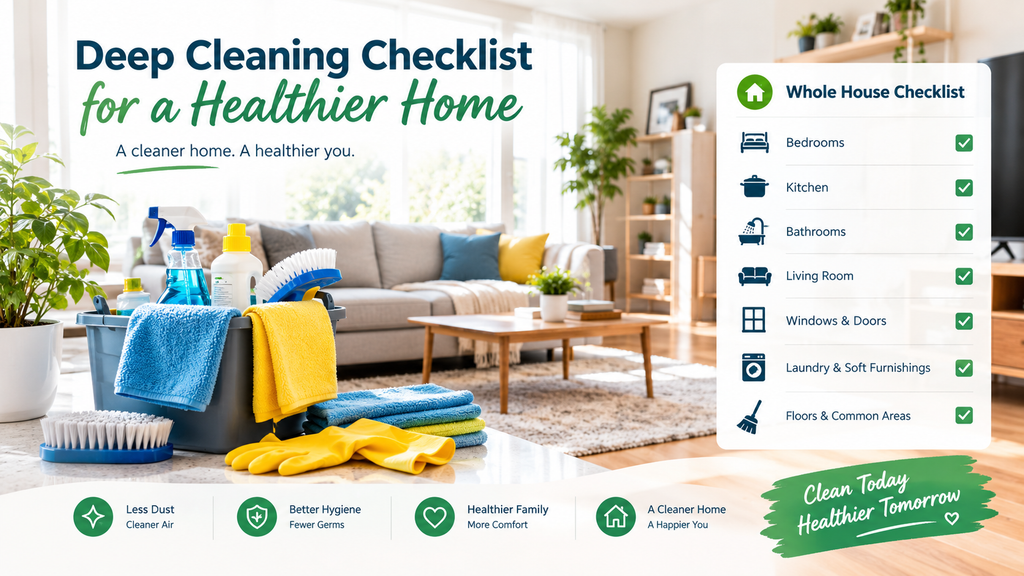
A clean home is more than a pleasant place to live. Regular cleaning helps remove dust, dirt, food residue, and other impurities that can build up on household surfaces. Following a deep cleaning checklist for a healthier home makes it easier to clean overlooked areas, maintain better hygiene, and create a more comfortable living environment.
Unlike everyday tidying, deep cleaning focuses on areas that are often missed during routine chores, including ceiling fans, baseboards, kitchen appliances, bathroom grout, window tracks, and furniture underneath.
This room-by-room guide explains what to clean, which supplies to prepare, how deep cleaning checklist to organize your tasks, and how to maintain your home after a deep clean.
What Is a Deep Cleaning Checklist?
A deep cleaning checklist is a structured list of cleaning tasks designed to help you clean your home thoroughly, including hard-to-reach and frequently overlooked areas. It typically covers bedrooms, bathrooms, kitchens, living rooms, floors, windows, and high-touch surfaces.
Quick answer: To deep clean your home, declutter each room, dust from deep cleaning checklist top to bottom, clean surfaces and appliances, scrub bathrooms and kitchen areas, vacuum upholstery and floors, mop suitable hard floors, and finish by cleaning frequently touched surfaces. Always use cleaning products according to their labels.
Why Is Deep Cleaning Important for a Healthier Home?
Regular deep cleaning can help maintain a more hygienic and comfortable deep cleaning checklist home by addressing dirt and buildup that ordinary cleaning may miss.
1. Helps Remove Dust and Dirt
Dust can collect on shelves, ceiling fans, furniture, curtains, and other deep cleaning checklist surfaces. Dusting and vacuuming help remove accumulated particles rather than allowing them to remain throughout the living space.
Use a damp microfiber cloth on suitable surfaces to help capture dust instead of simply spreading it around.
2. Supports Better Household Hygiene
Kitchen counters, bathroom fixtures, doorknobs, and light deep cleaning checklist switches can collect dirt and germs through everyday use.
The Centers for Disease Control and Prevention (CDC) explains that cleaning with soap or detergent and water removes dirt and many germs from household surfaces. Disinfecting may be appropriate when someone is sick or when additional protection is needed.
3. Helps Keep Kitchens and Bathrooms Cleaner
Food residue, grease, soap scum, and moisture can deep cleaning checklist accumulate in frequently used areas. Cleaning these areas regularly helps maintain a more hygienic environment and makes future cleaning easier.
4. Helps Identify Maintenance Problems
Deep cleaning gives you an opportunity to notice leaking pipes, damaged seals, clogged drains, persistent moisture, and visible mold growth.
Address the underlying problem instead of relying only on surface cleaning. Significant or recurring mold problems may require professional assessment.
5. Creates a More Organized Living Space
Decluttering and cleaning together make it easier to deep cleaning checklist find household items, keep frequently used surfaces clear, and establish a manageable cleaning routine.
Essential Deep Cleaning Supplies
Prepare your supplies before starting. Having everything within reach can reduce interruptions and help you complete each room efficiently.
- Microfiber cloths
- Vacuum cleaner with suitable attachments
- Mop and bucket
- Broom and dustpan
- Scrub brushes and nonabrasive sponges
- Mild dish soap or an appropriate household detergent
- Bathroom and kitchen cleaners suitable for the surfaces
- Glass cleaner, if needed
- Cleaning gloves
- Trash bags and a laundry basket
- Step stool designed for safe household use
You do not need a different product for every surface. Choose deep cleaning checklist cleaners based on the material you are cleaning and follow the manufacturer’s directions.
Important safety tip: Never mix bleach with ammonia, acids, vinegar, or other cleaning products. Dangerous gases may be released. Provide ventilation and keep cleaning chemicals away from children and pets.
The Complete Room-by-Room Deep Cleaning Checklist
Use the following whole-house deep cleaning checklist as a practical deep cleaning checklist guide. Adapt it to your home’s size, materials, and cleaning needs.
1. Bedroom Deep Cleaning Checklist
Bedrooms collect dust on furniture, bedding, window deep cleaning checklist coverings, and floors. Clean from top to bottom so that dust falling onto lower surfaces can be removed afterward.
Bedroom checklist:
- Remove clutter from bedside tables and dressers.
- Dust ceiling fans and accessible light fixtures.
- Wipe shelves, picture frames, and decorative objects.
- Clean mirrors and suitable glass surfaces.
- Wipe door handles, light switches, and drawer pulls.
- Launder bedding according to care instructions.
- Vacuum the mattress using a suitable attachment, if appropriate.
- Clean beneath the bed and other accessible furniture.
- Vacuum carpets and rugs or clean hard floors appropriately.
- Wipe baseboards and accessible window sills.
- Empty the wastebasket and clean it if necessary.
Deep cleaning tip: Rotate or flip a mattress only if its deep cleaning checklist manufacturer permits it. Some modern mattresses are designed to be used on one side only.
2. Kitchen Deep Cleaning Checklist
The kitchen needs particular attention because it is used for deep cleaning checklist food preparation. Focus on grease, crumbs, food residue, appliance handles, and food-contact surfaces.
Kitchen checklist:
- Remove expired food and wipe refrigerator shelves as needed.
- Clean refrigerator handles and exterior surfaces.
- Clean the microwave inside and outside according to its manual.
- Wipe cabinet doors, handles, and drawer fronts.
- Degrease the stovetop with a compatible cleaner.
- Clean the oven according to the manufacturer’s instructions.
- Wipe countertops using a suitable food-safe surface cleaner.
- Clean the sink, faucet, and drain area.
- Remove crumbs from drawers and organize utensils.
- Clean the dishwasher filter if the manual recommends it.
- Wipe frequently touched appliance controls.
- Sweep and mop the floor with a suitable product.
- Empty the trash and clean the bin when needed.
Kitchen hygiene tip: Clean food-contact surfaces before deep cleaning checklist sanitizing or disinfecting them when necessary. Follow the product label, including dilution instructions and contact time, and rinse surfaces if the label requires it before food preparation.
3. Bathroom Deep Cleaning Checklist
Bathrooms require regular attention to moisture, soap residue, and deep cleaning checklistfrequently touched surfaces. Keep the room ventilated and use products appropriate for each surface.
Bathroom checklist:
- Remove used towels and washable bath deep cleaning checklist mats.
- Dust the exhaust fan exterior and accessible vents.
- Clean mirrors and glass shower doors.
- Scrub the sink and faucet.
- Clean the toilet, including the seat, exterior, and base.
- Remove soap scum from the shower or bathtub.
- Clean tile surfaces and grout with compatible products.
- Wipe cabinet doors, handles, and shelves.
- Clean shower fixtures according to their material.
- Empty and clean the wastebasket.
- Wash towels according to care instructions.
- Sweep and mop the floor.
- Check for leaks and persistent damp areas.
Bathroom cleaning tip: Do not mix toilet cleaners, bleach, vinegar, or other chemical products. If changing products, follow label directions and rinse the surface as directed before using another cleaner.
If mold keeps returning, investigate the moisture source. Extensive mold growth or mold associated with hidden water damage may need professional help.
4. Living Room Deep Cleaning Checklist
Living rooms contain upholstery, electronics, decorative items, and shared surfaces that can collect dust during everyday use.
Living room checklist:
- Remove unnecessary items from tables and shelves.
- Dust ceiling fans and accessible light fixtures.
- Clean shelves, picture frames, and decorative objects.
- Vacuum sofas and upholstered chairs using suitable attachments.
- Remove sofa cushions and clean underneath them.
- Wipe tables and other compatible hard surfaces.
- Clean remote controls and frequently touched handles.
- Clean screens according to the manufacturer’s instructions.
- Vacuum rugs and carpets.
- Clean accessible areas underneath furniture.
- Wipe baseboards and window sills.
- Empty wastebaskets and organize loose items.
Electronics tip: Never spray liquid directly onto televisions, laptops, remotes, or other electronics. Use the cleaning method recommended by the manufacturer.
5. Windows, Doors, and Common Areas
These areas are easy to overlook during routine cleaning but can make a noticeable difference to the overall appearance of your home.
Checklist:
- Dust door frames and accessible upper ledges.
- Wipe door handles and light switches.
- Clean interior window glass.
- Remove dust from window sills and tracks.
- Wipe accessible baseboards.
- Clean staircase handrails.
- Vacuum or sweep entryways.
- Clean floor mats and shake out washable rugs outdoors when appropriate.
- Remove visible cobwebs from accessible corners.
- Clean air return grilles and accessible vent covers.
Use a stable step stool when necessary rather than standing on chairs or furniture. Leave difficult-to-reach or hazardous areas to someone equipped to clean them safely.
6. Laundry and Soft Furnishings
Curtains, bedding, towels, and upholstery can collect dust and everyday residue. Their cleaning requirements depend on the material.
Checklist:
- Wash bed sheets and pillowcases.
- Wash towels and bath mats.
- Clean washable cushion covers.
- Launder curtains when their care labels permit it.
- Vacuum rugs and upholstered furniture.
- Clean laundry baskets when needed.
- Dry washed items completely before storing them.
Follow textile care labels and use an appropriate wash temperature. Avoid overloading the washing machine, and make sure items dry thoroughly.
A Practical Deep Cleaning Schedule
Trying to complete every task at once can feel overwhelming. Breaking the work into manageable sessions makes the process easier.
| Session | Main tasks |
|---|---|
| Session 1 | Declutter, gather supplies, dust high surfaces |
| Session 2 | Bedrooms and laundry |
| Session 3 | Kitchen and appliances |
| Session 4 | Bathrooms and moisture checks |
| Session 5 | Living room, upholstery, and electronics |
| Session 6 | Windows, common areas, and floors |
| Session 7 | Final checks and maintenance planning |
This is a flexible schedule, not a requirement to clean for seven consecutive days. A small apartment may take much less time than a large house with multiple bathrooms.
For each session, finish the room you are working on before moving to another area when practical.
How to Deep Clean Your Home More Efficiently
Work From Top to Bottom
Start with accessible upper surfaces, such as shelves and fan blades, before cleaning tables and floors. This prevents dust from settling on areas you have already finished.
Declutter Before Cleaning
Put away loose belongings, remove rubbish, and return items to their proper places. Clearing surfaces makes dusting and wiping more effective.
Clean Before Disinfecting
Cleaning and disinfecting are different processes. Cleaning removes dirt and many germs; disinfecting uses a product designed to kill specified germs on surfaces.
In most everyday situations, routine cleaning is sufficient. Disinfect when appropriate, such as when someone in the household is sick, and follow the label’s contact-time instructions.
Use the Right Cleaner for Each Surface
Natural stone, wood, stainless steel, glass, and painted surfaces may require different cleaning methods. Test a product on a small, inconspicuous area when compatibility is uncertain.
Avoid Dry Dusting in Dust-Prone Areas
A damp microfiber cloth can capture dust on suitable hard surfaces. For carpets and upholstery, use a vacuum suitable for the material and follow its instructions.
Ventilate the Home
Open windows when outdoor conditions allow, and use functioning kitchen and bathroom exhaust fans. Avoid creating excessive moisture while cleaning.
How Often Should You Deep Clean Your Home?
There is no single schedule that works for every household. Cleaning frequency depends on how many people live in the home, whether pets are present, how heavily rooms are used, and whether anyone is sick or particularly sensitive to dust.
| Area | Suggested approach |
|---|---|
| Kitchen counters | Clean after food preparation and spills |
| High-touch surfaces | Clean regularly and when visibly dirty |
| Bathroom fixtures | Clean regularly, with frequency based on use |
| Bedding and towels | Wash according to use and care instructions |
| Carpets and rugs | Vacuum regularly and deep clean when needed |
| Windows and baseboards | Clean when dust or visible dirt accumulates |
| Refrigerator | Check food regularly and clean spills promptly |
| Behind furniture | Include in periodic deep cleaning |
A useful approach is to maintain a weekly cleaning routine and reserve less frequent sessions for appliances, window tracks, baseboards, and other overlooked areas.
Deep Cleaning Mistakes to Avoid
Even a thorough cleaning routine can be less effective if products are used incorrectly.
Avoid these common mistakes:
- Mixing cleaning chemicals: Never combine cleaning products unless their labels explicitly permit it.
- Using one product on every surface: Incompatible cleaners may damage stone, wood, metal, or electronic equipment.
- Ignoring product contact time: Disinfectants need to remain wet on a surface for the time specified on the label.
- Cleaning floors first: Dust and debris from higher surfaces may settle on freshly cleaned floors.
- Leaving damp materials piled up: Allow washable items to dry completely.
- Overlooking ventilation: Use exhaust fans or fresh air where appropriate, especially when working with cleaning products.
- Ignoring recurring moisture: Repeated mold growth or persistent dampness requires attention to the underlying cause.
Frequently Asked Questions
What is the best order for deep cleaning a house?
Start by decluttering and gathering supplies. Dust accessible high surfaces, clean furniture and appliances, scrub kitchen and bathroom surfaces, vacuum upholstery and floors, and finish with suitable floor cleaning. Clean before disinfecting when disinfection is needed.
How long does it take to deep clean an entire house?
The time depends on the home’s size, condition, number of rooms, and available help. A small, regularly maintained home may need only several hours of work, while a larger or heavily soiled home may require multiple sessions.
What should be deep cleaned first?
Begin with decluttering and areas that are easy to overlook, such as high shelves and ceiling fan blades. Work from top to bottom and leave floor cleaning until the end of each room.
Does deep cleaning kill all germs?
No. Cleaning removes dirt and many germs, but it does not sterilize a home. Disinfection can kill specified germs when the product is used correctly, but ordinary household cleaning should not be described as eliminating every microorganism.
Is deep cleaning necessary every week?
Not usually. Many homes benefit from regular weekly chores and less frequent deep cleaning of overlooked areas. The right schedule depends on household activity, pets, visible dirt, and individual needs.
How can I make my home healthier without expensive cleaning products?
Start with basic supplies such as microfiber cloths, a suitable detergent, a mop, and a vacuum cleaner if available. Focus on removing dust, cleaning food-preparation surfaces, maintaining bathrooms, addressing leaks, and keeping frequently touched surfaces clean.
When should I hire a professional deep cleaning service?
Consider professional help when you lack time, have a large property, need specialized upholstery or carpet care, or face extensive buildup that ordinary cleaning cannot address. Significant mold, hazardous contamination, or suspected asbestos should be handled by appropriately qualified professionals rather than treated as an ordinary DIY cleaning task.
Final Thoughts
A deep cleaning checklist for a healthier home helps you work systematically through bedrooms, bathrooms, kitchens, living rooms, and overlooked household surfaces. The goal is not to make every surface sterile; it is to remove dirt, maintain hygiene, manage moisture, and establish a practical routine.
Start with one room, use appropriate cleaning products, and work from top to bottom. Once the initial deep clean is complete, regular maintenance will make future sessions easier and more manageable.