
Plumbing problems can start with something as small as a dripping faucet, a slow-draining sink, or a toilet that keeps running. Although these issues may not seem serious at first, ignoring them can lead to wasted water, unpleasant odors, damaged walls, and expensive repairs.
Understanding the common plumbing problems homeowners face can help you recognize early warning signs and decide when professional plumbing services are necessary. Regular maintenance, quick leak detection, and proper drain care can also help protect your home. The US Environmental Protection Agency (EPA) explains that undetected household leaks can waste significant amounts of water and may damage a property.
US EPA
+1
In this guide, we will explore five plumbing problems Common Plumbing Problems you should never ignore, their common causes, warning signs, prevention tips, and situations where calling a professional plumber is the safest option.
Quick Answer: What Are the Most Common Plumbing Problems?
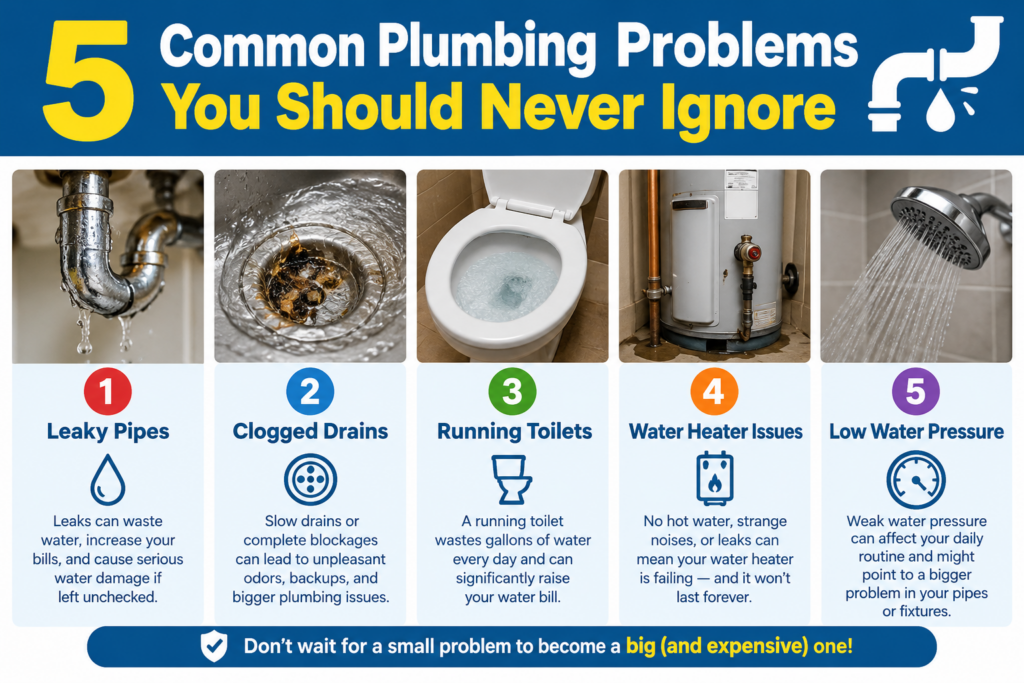
The five common plumbing problems you should never ignore are:
- Leaking pipes and faucets
- Clogged drains and toilets
- Low water pressure
- Water heater leaks and hot-water problems
- Running or overflowing toilets
Each problem can have different causes. Identifying the Common Plumbing Problems symptoms early can help you prevent further damage and choose the right solution.
1. Leaking Pipes and Faucets

Leaking pipes and dripping faucets are among the most Common Plumbing Problems common household plumbing problems. A small leak may appear harmless, but water escaping from pipes or fittings can gradually damage cabinets, flooring, walls, and nearby building materials.
Leaks can develop in kitchens, bathrooms, laundry areas, basements, utility rooms, and concealed pipework. Some are easy to spot, while others remain hidden behind walls or beneath floors.
Common signs of plumbing leaks
Look for these warning signs around your home:
- A faucet that continues dripping after being turned off
- Damp patches beneath sinks or around pipe connections
- Water stains on walls or ceilings
- Peeling paint or damaged flooring near plumbing fixtures
- An unexplained increase in your water bill
- Persistent musty odors near cabinets or plumbing lines
The EPA identifies worn fixtures, damaged pipes, corrosion, and Common Plumbing Problems equipment problems among possible causes of household leaks.
US EPA
+1
What causes leaking pipes and faucets?
Several issues can lead to plumbing leaks:
- Worn washers or seals: Faucet components Common Plumbing Problems can deteriorate over time.
- Loose connections: Pipe joints and fittings may develop leaks.
- Corrosion: Older or deteriorating pipes may become more vulnerable to leaks.
- Damaged pipework: Physical damage or faulty installation can allow water to escape.
- Excessive or fluctuating pressure: Pressure-related problems can contribute to plumbing failures.
The exact cause depends on the type, age, and condition of the plumbing system.
How can you prevent plumbing leaks?
Inspect visible pipes and fittings periodically, especially beneath sinks and around water-using appliances. Pay attention to unusual moisture, recurring stains, and unexpected changes in water usage.
If you suspect a leak, arrange an inspection rather than waiting for visible damage to become severe. For a confirmed leak, shut off the appropriate water supply if you can do so safely. If water is near electrical outlets or equipment, avoid the area and get appropriate professional assistance.
When should you call a plumber?
Contact a professional plumber if a leak continues, a Common Plumbing Problems pipe is damaged, moisture appears inside walls, or water stains keep returning. A sudden or substantial leak needs urgent attention.
2. Clogged Drains and Toilets

Clogged drains are another frequent plumbing problem in residential properties. A blockage can slow drainage, create unpleasant smells, and cause wastewater to back up into sinks, showers, bathtubs, or toilets.
A minor blockage may affect only one fixture. However, when several drains become slow or back up at the same time, the problem may involve a larger drainage line.
Common signs of a clogged drain
Watch for these symptoms:
- Water draining slowly from a sink or bathtub
- Water collecting around a shower drain
- Gurgling sounds from drains
- Unpleasant odors coming from plumbing fixtures
- Water backing up after using another fixture
- A toilet that repeatedly struggles to flush
These signs can indicate a blockage, although the precise cause requires further assessment.
What causes clogged drains?
Common causes include:
- Hair and soap residue accumulating Common Plumbing Problems in bathroom drains
- Grease and food waste entering kitchen pipes
- Foreign objects blocking toilets
- Mineral deposits or debris restricting older pipes
- Tree roots or damaged sections affecting underground drainage lines
Pouring cooking grease into a kitchen sink can contribute to blockages as it cools and accumulates. Similarly, flushing wipes and other unsuitable items can obstruct drainage systems.
How can you prevent clogged drains?
Follow these practical drain-maintenance tips:
- Use suitable drain strainers to catch hair and food particles.
- Place food scraps in the trash or compost rather than washing them down the sink.
- Collect cooking grease in a suitable container instead of pouring it into a drain.
- Flush toilets only with appropriate waste and toilet paper.
- Arrange professional cleaning if blockages repeatedly return.
Avoid mixing chemical drain cleaners or using them contrary to their labels. If a blockage persists, a plumber can determine whether mechanical cleaning or a more thorough inspection is needed.
When should you call a plumber?
Seek professional help if several drains back up together, wastewater enters your home, a toilet repeatedly overflows, or the blockage returns after basic maintenance. Stop using affected fixtures when continued use could cause additional flooding.
3. Low Water Pressure

Low water pressure can make everyday activities frustrating. Filling a sink takes longer, showers Common Plumbing Problems become less effective, and appliances that depend on a reliable water supply may not operate as expected.
However, low water pressure Common Plumbing Problems and low water flow are not exactly the same thing. A restricted faucet or clogged aerator can reduce the amount of water coming out even when the overall pressure is normal.
Portland.gov
Common signs of low water pressure
You may notice:
- Weak water flow from Common Plumbing Problems taps or showerheads
- Water pressure dropping when another fixture is used
- Poor flow from several taps throughout the property
- Hot water flowing more slowly than cold water
- Water pressure that changes unexpectedly
- A pump that behaves unusually or struggles to maintain supply
What causes low water pressure?
Low water pressure can have several possible causes:
- Partially closed valves: A Common Plumbing Problems supply valve may not be fully open.
- Blocked faucet aerators: Mineral deposits and debris can restrict water flow.
- Pipe corrosion or buildup: Older pipes may have reduced internal space.
- Supply interruptions: The incoming water supply may be temporarily reduced.
- Pump or tank problems: Homes using storage tanks or booster pumps may experience equipment-related issues.
- Leaks: A plumbing leak can affect the system’s performance.
In some homes, the cause may be outside the property, so changing plumbing fixtures alone will not necessarily solve the problem.
How can you troubleshoot low water pressure?
Start by observing whether the issue Common Plumbing Problems affects one fixture or the entire house.
If only one faucet has weak flow, its aerator or local plumbing may need attention. If multiple fixtures are affected, check whether there is a known supply interruption and consider having the system inspected.
If your home uses a storage tank or booster pump, have a qualified professional assess the equipment when the problem persists. Do not open electrical pump equipment or attempt repairs involving pressurized systems without suitable training.
When should you call a plumber?
Arrange a professional inspection if water Common Plumbing Problems pressure drops suddenly, remains consistently low, or is accompanied by damp walls, unusual pipe noises, or other signs of a leak.
4. Water Heater Leaks and Hot-Water Problems

Water heaters provide hot water for showers, cleaning, and other household activities. When a water heater stops working properly or develops a leak, it can disrupt your routine and potentially damage the surrounding area.
The source of the problem may be a Common Plumbing Problems plumbing connection, a valve, a component inside the unit, or the appliance itself. The appropriate response depends on the heater’s design and the symptoms you notice.
Warning signs of water heater problems
Common symptoms include:
- Little or no hot water
- Hot water that runs out unusually quickly
- Water collecting around the heater
- Rust-colored hot water
- Unusual noises from the unit
- Visible corrosion around connections
- Water temperature that changes unexpectedly
Not every symptom indicates a leak, and not Common Plumbing Problems every puddle near a water heater comes from the heater itself. Condensation or a nearby plumbing connection may also be responsible.
What causes water heater leaks?
Possible causes include:
- Loose or deteriorating plumbing connections
- Corrosion affecting the tank or fittings
- A faulty valve or seal
- Excessive system pressure
- An internal appliance failure
- Problems with installation or maintenance
A leak from the tank itself may require replacing the unit, while a connection-related issue may have a different remedy. A professional inspection can identify the source.
How can you prevent water heater problems?
Check the surrounding area for visible moisture and look for changes in hot-water performance. Follow the manufacturer’s maintenance recommendations and have the unit inspected when unusual symptoms appear.
For water heaters that use gas or electricity, repairs involving fuel lines, electrical components, heating elements, or pressure-relief devices should be handled by an appropriately qualified professional.
Important safety warning: If a gas-powered water heater produces a gas smell, leave the affected area and contact the appropriate emergency or gas service from a safe location. Do not operate electrical switches or use an open flame in the affected area. If there is a major leak, avoid contact with hot water and electrical equipment.
When should you call a plumber?
Call a qualified professional if the heater leaks, hot-water supply repeatedly fails, corrosion is visible, or unusual noises persist. A substantial leak or suspected gas or electrical hazard requires immediate attention.
5. Running or Overflowing Toilets

A toilet that continues running after flushing may Common Plumbing Problems seem like a minor inconvenience, but it can waste water and indicate a faulty internal component. An overflowing toilet is more urgent because it can spread contaminated water onto floors and nearby surfaces.
These are two related but different problems: a running toilet may waste water continuously, while an overflowing toilet can cause immediate water damage and sanitation concerns.
Common signs of toilet problems
Look for these warning signs:
- Water continues running long after flushing
- The cistern or tank refills repeatedly
- The toilet flushes weakly
- Water leaks around the toilet base
- The bowl fills unusually high
- Water rises instead of draining after flushing
- The toilet frequently becomes blocked
What causes a running toilet?
A running toilet often has a problem with one of its internal components, such as:
- A worn or damaged flapper
- A faulty fill valve
- An incorrectly adjusted float
- A damaged seal
- A flush mechanism that does not close properly
A toilet that runs continuously may waste a Common Plumbing Problems considerable amount of water. The EPA recommends checking for toilet leaks and maintaining water-using fixtures to reduce water waste.
US EPA
+1
What causes a toilet to overflow?
Overflowing can occur because of a blocked Common Plumbing Problems toilet, a drainage restriction, or a problem with the flushing mechanism. If water rises dangerously high, stop flushing and avoid using other connected fixtures until the cause is understood.
Do not attempt to clear a serious blockage if contaminated water is backing up into the bathroom or other areas of the home.
How can you prevent toilet problems?
- Avoid flushing wipes, sanitary products, and other unsuitable materials.
- Pay attention to toilets that refill repeatedly.
- Check for visible moisture around the toilet base.
- Arrange repairs when the flushing mechanism repeatedly malfunctions.
- Have recurring blockages professionally inspected.
When should you call a plumber?
Call a plumber if the toilet repeatedly overflows, leaks Common Plumbing Problems around its base, keeps running after repairs, or shows signs of a larger drainage problem. If contaminated water has entered the home, keep children and pets away from the affected area and arrange appropriate cleanup.
Why You Should Never Ignore Plumbing Problems
Plumbing problems rarely become easier to manage when they are left unattended. The consequences depend on the severity of the fault, how long it continues, and where the problem occurs.
Here are four important reasons to address plumbing issues promptly.
1. Prevent water damage
Leaks can damage cabinets, floors, ceilings, and other building materials. Water trapped inside walls or beneath flooring may also be difficult to detect without a professional inspection.
2. Reduce unnecessary water waste
Dripping faucets, leaking pipes, and running toilets can waste water over time. Detecting and repairing these problems can help reduce avoidable water consumption.
US EPA
+1
3. Avoid more extensive repairs
A minor plumbing fault may require a relatively simple repair, while Common Plumbing Problems a problem that continues unchecked may affect additional components or materials. Early attention does not guarantee a lower repair cost, but it can help limit further damage.
4. Maintain a cleaner, safer home
Blocked drains, wastewater backups, and persistent dampness can create unpleasant and potentially unhealthy conditions. Promptly addressing the underlying problem helps restore normal use of affected areas.
DIY Plumbing Fixes vs. Professional Plumbing Services
Not every plumbing problem requires the same level of expertise. Some simple observations and maintenance tasks can be handled by homeowners, while other problems require professional equipment, training, or specialist repairs.
| Plumbing problem | What you can do safely | When to seek professional help |
|---|---|---|
| Dripping faucet | Identify the affected fixture and check for visible moisture | The leak persists or fittings need repair |
| Slow drain | Remove accessible debris from a drain strainer | Blockage persists or several drains back up |
| Low water pressure | Compare the flow from different taps | Pressure remains low or changes suddenly |
| Water heater issue | Observe symptoms without opening the unit | There is a leak, equipment fault, or safety concern |
| Running toilet | Observe whether the toilet continues refilling | The issue persists or the toilet overflows |
These are general guidelines, not a diagnosis. Always follow appliance instructions and avoid opening pressurized equipment, working on gas lines, or handling electrical components.
How to Prevent Common Household Plumbing Problems
Preventive maintenance can help you identify problems before they cause significant disruption.
Inspect visible pipes regularly
Look beneath sinks, around toilets, and near water-using appliances. Check Common Plumbing Problems for drips, corrosion, moisture, and unusual odors.
Keep drains clear
Use suitable strainers, dispose of grease properly, and Common Plumbing Problems avoid flushing items that are not designed for toilets.
Monitor water usage
An unexplained increase in water consumption may Common Plumbing Problems indicate a hidden leak. If your property has a water meter, a qualified adult can follow the utility’s instructions for checking whether water is being used unexpectedly. A change in the meter reading can indicate a leak, although it does not identify the exact source.
US EPA
+1
Pay attention to unusual sounds
Gurgling drains, banging pipes, or repeated pump noises may indicate a problem that deserves further inspection.
Schedule maintenance when needed
Older plumbing systems, recurring blockages, and water heaters with repeated faults may benefit from professional assessment. Follow the manufacturer’s maintenance schedule for appliances and equipment.
Know where the main water shutoff is located
Knowing the location of the main water shutoff can help an adult respond to a plumbing emergency. If a significant leak occurs, shut off the supply if it is safe and accessible, and contact a professional.
Frequently Asked Questions About Common Plumbing Problems
What are the five most common plumbing problems?
Five common plumbing problems are leaking pipes and faucets, clogged drains and toilets, low water pressure, water heater leaks or failures, and running or overflowing toilets. The causes vary, so persistent problems should be inspected by a qualified plumber.
What plumbing problems should never be ignored?
Major leaks, overflowing toilets, wastewater backups, sudden drops in water pressure accompanied by signs of a leak, and water heater safety concerns require prompt attention. These problems can cause water damage, disrupt essential services, or create safety hazards.
What causes plumbing problems in a house?
Common causes include worn seals, damaged pipes, corrosion, clogged drains, faulty valves, mineral buildup, and improperly installed fixtures. The age of the plumbing system and the quality of previous repairs may also affect reliability.
How can I tell if I have a hidden plumbing leak?
Possible warning signs include unexplained water-bill increases, persistent dampness, water stains, musty odors, and a water meter that changes when no water is being used. These signs do not confirm a leak’s exact location, so a professional inspection may be necessary.
When should I call a professional plumber?
Contact a plumber when a leak persists, several drains back up, water pressure changes unexpectedly, a water heater leaks, or a toilet repeatedly overflows. Seek urgent help for substantial leaks, contaminated-water backups, or suspected gas and electrical hazards.
Can regular plumbing maintenance save money?
Regular inspections and timely repairs can help reduce water waste and limit damage caused by certain plumbing faults. However, the savings depend on the problem, the condition of the system, and the cost of the required repairs.
Conclusion
The five common plumbing problems you should never ignore are leaking pipes and faucets, clogged drains and toilets, low water pressure, water heater leaks, and running or overflowing toilets.
Although some plumbing issues begin with minor symptoms, ignoring them can lead to unnecessary water waste, property damage, and disruption to everyday activities. Regular inspections, sensible drain maintenance, and prompt attention to unusual changes can help keep your plumbing system in good working condition.