
Moss growing on a roof may seem like a minor cosmetic problem, but it can become a maintenance concern if left untreated. Moss retains moisture, collects debris, and can grow around the edges of roofing shingles. Over time, heavy growth may interfere with drainage and contribute to roofing damage.
If you are wondering how to remove moss from a roof, the safest approach depends on your roofing material, the amount of moss, and the condition of the roof. Aggressive scrubbing and high-pressure washing can damage asphalt shingles, while unsuitable cleaning products may affect roofing materials, gutters, plants, and surrounding surfaces.
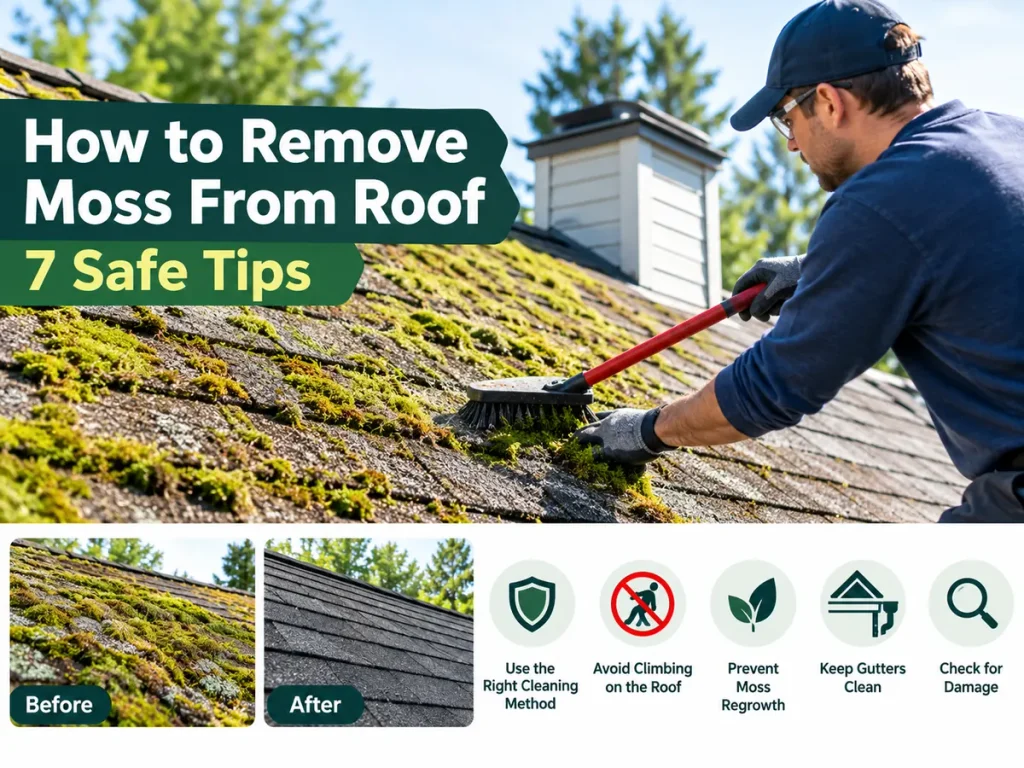
In this guide, you will learn how to identify roof moss, choose an how to remove moss from roof appropriate cleaning method, prevent regrowth, and decide when professional roof cleaning is how to remove moss from roof the better option.
What Is the Safest Way to Remove Moss From a Roof?
The safest way to remove roof moss is to identify the roofing material, use a manufacturer-approved how to remove moss from roof cleaning treatment, and avoid methods that could damage the roof surface. For steep, slippery, fragile, or heavily moss-covered roofs, hire a qualified roof-cleaning professional instead of attempting the work yourself.
For how to remove moss from roof asphalt shingles, the Asphalt Roofing Manufacturers Association recommends avoiding pressure washing because it can remove protective granules and shorten the roof’s service life.
Why Does Moss Grow on Roofs?
Moss grows best in environments how to remove moss from roof where moisture remains available for extended periods. Certain roof areas are particularly vulnerable because they receive limited sunlight or collect organic debris.
Common causes include:
- Shade from trees: Overhanging branches can prevent how to remove moss from roof roofing surfaces from drying quickly.
- Persistent moisture: Damp conditions create a favorable environment for moss growth.
- Accumulated debris: Leaves, twigs, and other organic matter can retain moisture on the roof.
- Poor drainage: Blocked gutters or drainage problems can contribute to damp how to remove moss from roof conditions.
- Limited airflow: Roof sections with restricted airflow may stay how to remove moss from roof wet for longer.
Moss often appears on shaded roof slopes, around valleys, and near areas where debris accumulates. Identifying the cause of growth is important because removing existing moss without improving these conditions may allow it to return.
7 Safe Tips for Removing Roof Moss
1. Identify Your Roofing Material
Before choosing a roof moss removal method, determine what type of roof how to remove moss from roof you have. Asphalt shingles, metal roofing, clay tiles, concrete tiles, and wood shingles can require different cleaning approaches.
A product that is suitable for one roof may damage another. Check your roofing manufacturer’s how to remove moss from roof maintenance instructions and warranty conditions before selecting a treatment.
If you cannot identify the material or the roof is showing signs of deterioration, ask how to remove moss from roof a qualified roofing professional to inspect it first.
2. Avoid Climbing Onto a Moss-Covered Roof
Moss can make roofing surfaces extremely slippery, particularly after rain or when cleaning products are applied. Steep slopes, loose shingles, and fragile roof sections create additional how to remove moss from roof hazards.
Do not attempt to climb onto a moss-covered roof to brush or scrape it. Roof how to remove moss from roof cleaning is best handled by trained professionals with appropriate fall-protection equipment and suitable methods for the roof type.
From the ground, you may be able to observe visible moss, overhanging branches, and how to remove moss from roof drainage problems using a safe viewing position.
3. Choose a Roof-Approved Moss Treatment
A suitable moss treatment can help loosen or kill existing growth without how to remove moss from roof unnecessary damage to the roofing surface. However, not every cleaner is appropriate for every material.
Before using any product, check that it is approved by the roof manufacturer. Follow the product label how to remove moss from roof exactly, including application limits, contact time, rinsing requirements, and environmental precautions.
Also how to remove moss from roof consider how runoff may affect gutters, landscaping, pets, and nearby water sources. Some cleaning products can harm plants or other surfaces if they are used improperly.
For how to remove moss from roof extensive growth or uncertain roof conditions, a professional can select a compatible treatment and apply it safely.
4. Avoid High-Pressure Washing
Pressure washing may appear to how to remove moss from roof be a quick way to remove moss, but it can cause significant damage to asphalt shingles. High-pressure water can dislodge protective granules, disturb shingle edges, and force water beneath roofing components.
It may also damage other roof materials, depending on their condition and construction.
Instead of relying on force, choose a manufacturer-approved how to remove moss from roof cleaning method appropriate for the roofing material. A qualified professional can determine whether treatment, gentle removal, or repair is needed.
5. Allow Treated Moss to Release Gradually
After an appropriate treatment, dead or weakened moss may loosen gradually rather than how to remove moss from roof disappearing immediately. Weather and the type of roofing material can affect how quickly visible growth clears.
Avoid aggressive how to remove moss from roof scraping or repeated scrubbing to make the roof look clean faster. These actions may damage the surface beneath the moss.
A professional can explain the expected results, whether follow-up treatment is necessary, and how to recognize any damage that requires repair.
6. Check Gutters and Roof Drainage
Roof moss is only one part of roof maintenance. Gutters and drainage paths also need attention because leaves and other debris can obstruct water flow.
Blocked gutters may contribute to water overflow, damp exterior walls, and moisture problems around the roofline.
Arrange for gutters to be checked and cleaned safely. If water is pooling, overflowing, or draining incorrectly, have the underlying problem assessed instead of focusing only on visible moss.
7. Inspect the Roof for Damage After Cleaning
Once the moss has been treated and the roof can be inspected safely, check for signs of damage. A professional roof inspection can identify issues that may have been hidden beneath the growth.
Look for concerns such as:
- Missing, cracked, or curling shingles
- Loose roofing materials
- Damaged flashing around roof openings
- Persistent leaks or water stains indoors
- Blocked or damaged drainage components
- Areas where the roof surface appears worn or deteriorated
Removing moss will not repair existing roof damage. If you notice leaks or damaged roofing materials, arrange appropriate repairs promptly.
Which Roof Moss Removal Methods Should You Avoid?
Choosing the wrong cleaning method can create more problems than the moss itself. The following methods deserve particular caution.
High-pressure water
High-pressure washing can damage shingle granules and roofing surfaces. It should not be used on asphalt shingles.
Aggressive scraping
Metal scrapers, harsh brushing, and forceful removal can scratch, crack, or dislodge roofing materials. Use only methods approved for the specific roof type.
Unapproved household chemicals
Household cleaners may contain ingredients that damage roofing materials, corrode metal components, or harm plants through runoff. Do not mix cleaning chemicals or use an unapproved solution.
Walking directly on moss-covered roofing
Moss creates a slipping hazard, and foot traffic can damage fragile or aged roofing. Professional assessment and cleaning are safer choices for roofs that are difficult to access.
How to Prevent Moss From Growing Back on Your Roof
Removing moss is only part of the solution. Prevention focuses on reducing the moisture and debris that allow moss to return.
Trim overhanging branches
Where appropriate, have trees maintained so that more sunlight and airflow reach the roof. Tree work should also be performed safely by qualified professionals when branches are difficult to reach.
Keep gutters clear
Arrange regular gutter maintenance so rainwater can drain correctly. Blocked gutters may contribute to moisture problems around roof edges.
Remove accumulated debris
Leaves, twigs, and other debris can hold moisture against roofing materials. Arrange safe, non-abrasive removal when debris begins to collect.
Correct drainage issues
If a roof valley, gutter, or downspout repeatedly holds water or directs it onto another roof section, investigate the underlying drainage problem.
Schedule periodic roof inspections
Routine inspections can help identify moss, damaged shingles, drainage issues, and other maintenance concerns before they become more serious.
The right inspection schedule depends on your roofing material, climate, surrounding trees, and roof condition.
How Often Should You Remove Roof Moss?
There is no single schedule that works for every roof. Roofs in damp, shaded environments may develop moss faster than roofs that receive more sunlight and dry quickly.
Inspect your roof periodically from a safe location and arrange a professional inspection when you notice recurring growth, damaged shingles, drainage problems, or signs of a leak.
If moss repeatedly returns, address the conditions that encourage it rather than relying on frequent chemical treatments alone.
Can Roof Moss Damage Your House?
Yes, extensive moss growth can contribute to roofing problems. Moss holds moisture and may interfere with the way overlapping shingles shed water. Heavy growth can also trap debris and make existing roof defects harder to identify.
However, the presence of moss does not automatically mean the roof needs replacement. The seriousness depends on the roofing material, the amount of growth, the age of the roof, and any existing damage.
A professional inspection can determine whether cleaning is sufficient or whether repairs are also necessary.
DIY Roof Moss Removal vs. Professional Cleaning
| Factor | Professional cleaning | DIY approach |
|---|---|---|
| Safety | Trained workers can use suitable safety equipment | Climbing onto a roof creates significant fall risks |
| Roof protection | Methods can be selected for the material | Incorrect tools or products may damage roofing |
| Large moss patches | Better suited to extensive or difficult areas | May be unsuitable for large or steep roofs |
| Damage assessment | Can identify visible roofing concerns | Hidden damage may be overlooked |
| Cost | Requires a service fee | May reduce labor costs, but mistakes can be expensive |
For steep roofs, extensive moss, fragile materials, or any situation requiring rooftop access, professional cleaning is generally the safer choice.
When Should You Call a Roof Cleaning Professional?
Contact a qualified professional if:
- Moss covers a large portion of the roof.
- The roof is steep, slippery, or difficult to access.
- Shingles are cracked, loose, or missing.
- You see signs of a roof leak.
- You are unsure which cleaning product is compatible with your roof.
- Moss returns repeatedly despite maintenance.
- Your roof warranty specifies particular cleaning procedures.
Ask the contractor which method they will use, whether it is approved for your roofing material, how runoff will be managed, and whether they have suitable safety procedures and insurance.
Frequently Asked Questions
How do you remove moss from a roof safely?
Identify the roofing material first, then use a manufacturer-approved treatment and removal method. Avoid pressure washing and aggressive scraping. For steep, slippery, or heavily covered roofs, hire a qualified professional rather than climbing onto the roof.
Is it safe to pressure wash moss off a roof?
No, pressure washing is not recommended for asphalt shingles because it can remove protective granules and damage the roofing system. Other materials may also be damaged by excessive pressure.
What kills moss on a roof naturally?
There is no single natural treatment that is safe and effective for every roof. Reducing shade, clearing debris, and improving drainage help discourage growth. For existing moss, choose a cleaning method compatible with the roofing material rather than assuming that a household or natural remedy is harmless.
Can vinegar remove roof moss?
Vinegar is not a universally approved roof-cleaning treatment. Its suitability depends on the roofing material, product concentration, surrounding surfaces, and runoff conditions. Check the manufacturer’s guidance before applying any acidic cleaner.
How long does it take for roof moss to disappear after treatment?
The time varies with the treatment, roof material, weather, and amount of moss. Some growth may loosen gradually over subsequent weeks. Follow the product instructions and avoid aggressive removal to speed up the process.
Does roof moss mean I need a new roof?
Not necessarily. Some roofs can be cleaned and maintained, while others may have underlying deterioration that requires repair or replacement. A qualified roofing professional can assess the condition of the shingles and other components.
How can I stop roof moss from returning?
Reduce persistent shade where practical, keep gutters clear, remove accumulated debris safely, correct drainage issues, and arrange periodic inspections. These measures help reduce conditions that encourage moss growth.
Is roof moss removal expensive?
The cost depends on roof size, slope, accessibility, roofing material, the extent of moss, and the cleaning method required. Request a written estimate from a qualified local contractor and confirm whether inspection, treatment, cleanup, and any follow-up visit are included.
Conclusion
Learning how to remove moss from a roof starts with understanding your roofing material and choosing a method that protects it. Avoid high-pressure washing, harsh scraping, and climbing onto slippery roof surfaces.
For lasting results, combine suitable moss treatment with good drainage, debris management, and periodic roof inspections. If the roof is steep, damaged, or heavily covered in moss, a qualified roof-cleaning professional can help determine the safest next step.
Regular roof maintenance can help protect your home, preserve roofing materials, and reduce the likelihood of preventable repair problems.